Showing posts with label classroom library. Show all posts

Wednesday, August 19, 2015

Classroom Library Check-Up and Changes


It seems that I am always trying to improve how I arrange and present books in my class library!  I have written other posts about my class library here, here and here.  The class library is the center of the universe in my classroom.  It gets lots of business and I want students to be able to locate books easily.  Many of my students come to my classroom with limited experience self-selecting books and are unfamiliar with many titles and collections.  Many rely on parents, teachers and librarians to find and choose books for them to read.  But if I want my students to own their reading lives I need to organize my library so my young "customers" can locate books they will enjoy. The traditional way public or school libraries display books, with spines out or by Dewey Decimal system is not reader friendly and I think difficult for students to find books independently.  I like the books to be face out and I try to group my books into categories that make sense to my students.  So my August planning always begins with a library check-up.

Last year I moved to a new building and a new grade - I went from second to third grade.  Packing up my classroom for the move pushed me to weed out books from my collection, sort and pack books in boxes that made sense for life in third grade and donate books to some of my colleagues in the primary grades.  Over the years I had not only collected books, but some nice prime shelving as well.  My new classroom had much less shelf space for displaying collections.  Even with the purchase of some inexpensive Target shelves I still had hundreds of books packed in plastic storage containers. This year I was fortunate to inherit a huge shelf when another third grade teacher retired.  So the first thing I did when returning to my classroom this month to begin setting up for the new year was to start rearranging the class library.

I still like sorting books into series, but have added baskets reflecting genres and categories that third graders relate to - realistic fiction, fantasy, humorous, animal fiction, etc.  I also have a non-fiction section and have tried to group them into different categories to make it easy for students to select books.

The biggest change I am making to my class library is putting nearly ALL of my books into the library which makes them available to my students all the time.  In the past I have only put out certain types of books at certain times of the year.  For instance, while teaching second grade, I only put out the poetry books or other themed study while we were currently studying that topic.  One of the reasons was simply lack space in the library, but I also think I didn't view many of these books as independent reading material, especially when I taught second grade.

So now I have an entire shelf for poetry books out on permanent display which also reflects my goal of reading poetry more regularly.  I have taken all my wonderful picture books and lined the shelves with those as well. I still have a small personal shelf where I keep books that I refer to as mentor texts that I use in my lessons.  Those will not circulate in the class library.

As elementary teachers, we all have students with varying reading levels and abilities, so it's important that our libraries have books for all of these readers.  However, last year I found that certain book baskets were rather unpopular and I think it is because students may think these baskets are easy or baby books.  In second grade I had put my Hello Readers, Step into Reading and other leveled series into separate baskets.  This worked for my second graders, but not my third graders. So this year I decided to take these books and integrate them into other baskets.  I'm hopeful that this change will help.

Another change I am making is my book check out system - or I should call it my lack of a system!  I've tried many ways to do this and the truth is every system falls apart by November.  I do not want to police my class library and I have tried to organize methods for students to record and maintain records for book sign out.  The simple truth is the organized students do it and the less-organized students don't!  In the end, I generally know what books my students have in their book baskets because I talk to them about their reading every day.  And students usually know who has the most popular books as well!  The biggest problem I have is re-shelving books.  Students either can't remember where they go, or are careless and place the books anywhere.  It only takes a few careless students to cause a real mess of the class library!  So I'm trying something new this year - a return basket.  Students will put any returns in this basket and I can re-shelf them as needed.  Of course if they know where the book goes that will be fine and I know I will always have a few student helpers that have excellent organizational skills and will want to be library aides.  And in case you are wondering, some books do go missing with my system, but only a few.

I love seeing how others organize their classroom libraries.  So please share in the comments below.

Here's some pictures of my newly arranged class library.  It will always be ever-changing!

New shelf all ready to be filled with books! It does cover up a wall used for displaying student work and anchor charts, but it is the only wall wall available.
All filled up, just need to add some labels.


View of the Non Fiction Section

Some of those storage boxes that are now empty and books are in the class library ready for students!
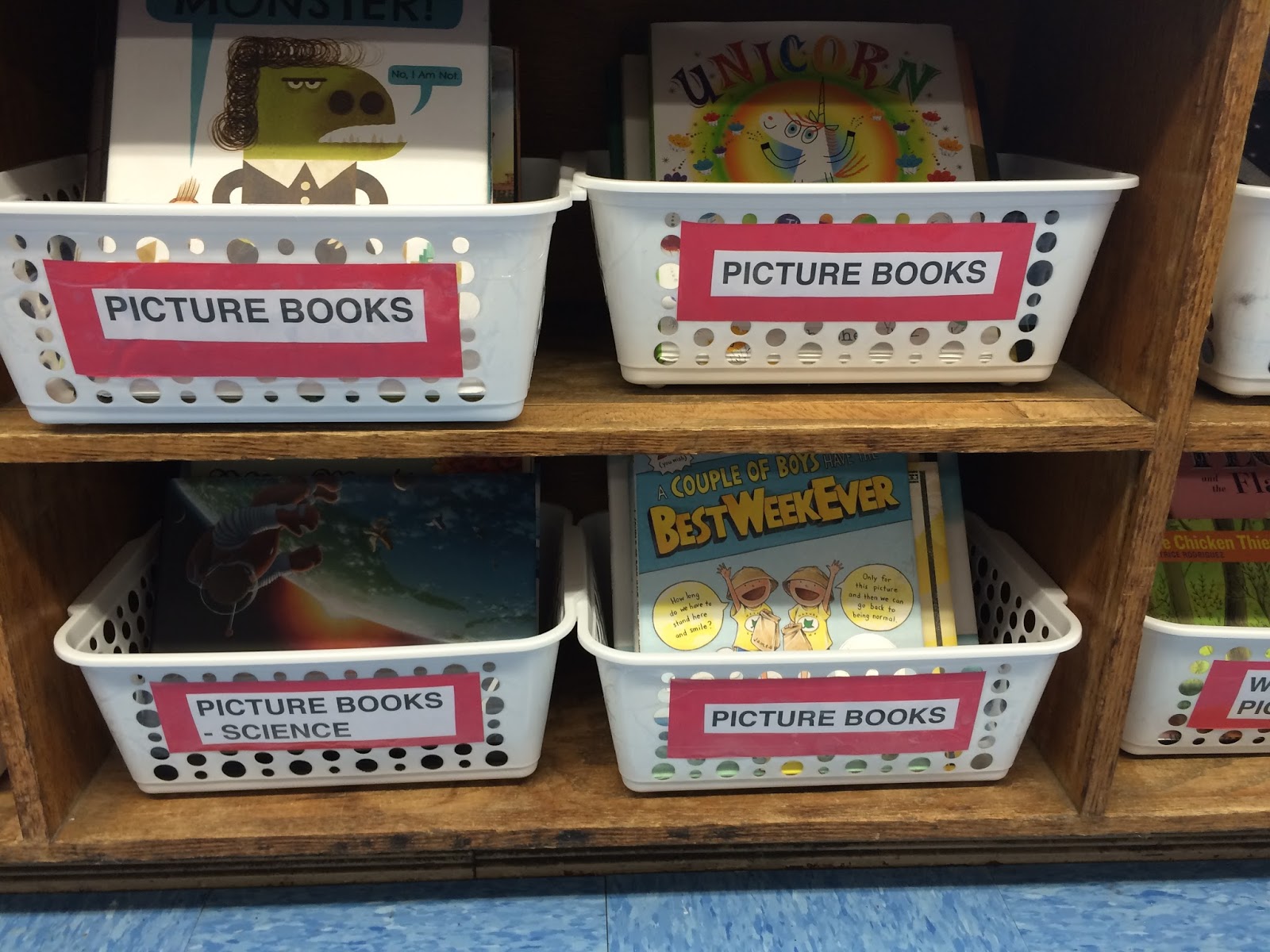
Picture Book Section


New Poetry Section - I wish the baskets could be turned so students could see covers of books, but the shelf sections aren't wide enough.

Sunday, March 3, 2013

Classroom Library - Sorting the Non-Fiction


This week I am diving into a big non-fiction unit in Reading workshop. Although I do have a section of the library dedicated to non-fiction I usually add more by taking out several plastic tubs of non-fiction books I have stored in my closet. I also check out tons of non-fiction from our school library to help round out my collection. (Shhhhh....I also take books from our book room and put them in the class library. But you won't tell anyone will you?)  My goal is to have books that second graders can read independently. Most of the books are not leveled. I just have not had the time to level them all, and many probably don't have a Fountas & Pinnell level anyway. It 's on my to-do list! So, we rely on our lessons about choosing a good fit book, and the fact that I regularly confer with students and know them well as readers. I also know the books in my library pretty well which helps me match them to a reader. But, I admit that I need to read more non-fiction!

I like to have my students sort the books into categories and label the book baskets themselves. I do this for several reason. First, it allows students to preview what will be in the library and know where they can find a particular book if they are involved in sorting and labeling the baskets themselves.  Sorting the books together also gives me a chance to assess their knowledge of non-fiction topics. For example, this week I found out that the majority of the class had an understanding of what mammals were, but didn't have a lot of background knowledge about earth science, geography or history.

By the time we began the sorting activity students had noticed that several of the library shelves had been cleared and a a giant cart of books had appeared in the classroom.  So there was already excitement generated. I began the activity by explaining our purpose for sorting. We want to be able to find the books that we are interested in reading. I remind them how our fiction section is organized, but explain that with non-fiction we might want to do it differently. I use our basket of books labeled "non-fiction animals", and ask if we can sort the books into separate categories. Hands go up immediately and students share their ideas. I give each table a pile of books to sort and they get busy. I walk around and talk to the groups about their thinking, mostly asking questions and nudging their discussions or decisions in the right direction.

Once groups have sorted their books, we sit down on the rug and I ask someone to share a category. "We have a lot of books about reptiles." Immediately, there are hands up from other groups that also have reptile books. I give them a basket, a sentence strip, sharpie and a post it with the correct spelling. Off they go to fill our first basket. And I continue this way. I have to admit it gets a bit crazy, but in a good way. There are piles of books everywhere and students eagerly waiting to create a category. Once we get going the tape dispenser and sharpie markers are very popular. And sometimes we end up with duplicate labels.  It took us 2 work sessions to get most of the books sorted.  Exhausting, but important.

So, now we are ready to review our lessons on selecting good fit books with an eye for non-fiction books.  And next week we will begin learning about non-fiction text features and reading strategies.

How do you organize you classroom library for non-fiction?
Do you use a leveled library?


Cart full of books from the library.